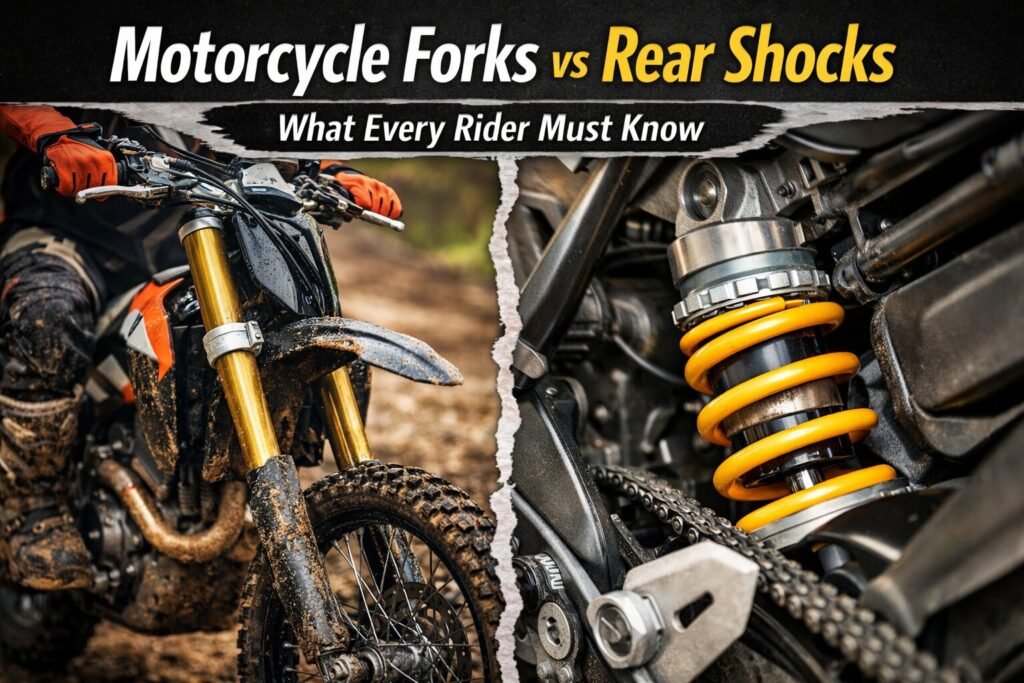
Motorcycle suspension plays a major role in how your bike feels, handles, and keeps you safe on the road or trail. Many riders focus on engine power or tire choice, but suspension is just as important. Two main parts of the suspension system are front forks and rear shocks. Understanding how they work and how they are different can help you ride better and take proper care of your motorcycle.
In this detailed guide, we will explain what forks and rear shocks do, how they affect performance, and when you should service or upgrade them.
Motorcycle suspension is designed to absorb bumps, keep tires in contact with the ground, and maintain stability. According to research from the Motorcycle Safety Foundation (MSF), proper suspension setup helps riders maintain control during braking, cornering, and riding on uneven surfaces.
Without a good suspension system, a motorcycle can feel unstable, uncomfortable, and unsafe. Suspension also affects braking distance, tire wear, and rider fatigue.
The suspension system has two main ends:
Both work together but perform slightly different roles.
Motorcycle forks are located at the front of the bike. They connect the front wheel to the frame and allow the wheel to move up and down when you hit bumps.
Most motorcycles use telescopic forks, which include:
When the front wheel hits a bump, the fork compresses. Then it slowly returns to its original position. This movement helps maintain traction and prevents the rider from feeling harsh impacts.
According to technical guides from manufacturers like Showa and KYB, proper fork damping helps control front-end dive during braking and improves corner stability.
There are different fork designs used in modern motorcycles:
These are common on street bikes and beginner motorcycles. They are simple, cost-effective, and easy to maintain.
Also called inverted forks, these are used in sport bikes and high-performance dirt bikes. They provide better stiffness and improved handling at high speeds.
These forks use advanced damping systems and are often found in racing or premium suspension setups.
Rear shocks support the back of the motorcycle and help manage weight transfer during acceleration, braking, and cornering.
They also improve comfort by reducing the impact of bumps and rough terrain.
Rear shocks include:
According to studies shared by suspension tuning experts and racing teams, rear shock setup greatly affects traction during acceleration. A poorly adjusted shock can cause wheel spin or loss of control.
Older motorcycles and some cruisers use two shocks on both sides of the rear wheel. These are simple and durable.
Modern motorcycles mostly use a single central shock. This design improves balance and allows better tuning options.
Many dirt bikes and adventure bikes use linkage systems. These provide progressive damping, meaning the suspension becomes stiffer as it compresses further.
Although both are suspension components, forks and rear shocks perform different functions.
Forks handle braking forces and front-end stability. Rear shocks manage acceleration forces and rear wheel traction.
Front suspension affects steering response and confidence in corners. Rear suspension affects comfort and stability on long rides.
Fork tuning often focuses on dive control and cornering precision. Rear shock tuning focuses on ride height, traction, and load handling.
Fork seals and oil may need servicing more often because they face dust, water, and braking stress. Rear shocks also require maintenance but usually at longer intervals.
Research from SAE International (Society of Automotive Engineers) shows that suspension tuning can improve braking efficiency and reduce instability in sudden maneuvers.
For example:
These issues can reduce rider confidence and increase accident risk.
This is why professional suspension setup services, such as those offered by RMR Suspensions, are valuable for riders who want better control and performance.
Riders should regularly inspect suspension components. Common warning signs include:
According to maintenance recommendations from brands like Öhlins, suspension should be serviced based on riding hours or mileage. Dirt bike riders may need more frequent servicing due to mud and harsh conditions.
Many riders wonder which upgrade makes the biggest difference.
In many cases, upgrading both ends provides the best results. Suspension works as a system, not as separate parts.
Professional tuning experts, including specialists at RMR Suspensions, often recommend a balanced setup based on rider weight, riding style, and terrain.
Comfort and stability are the main goals. Medium damping and proper preload help absorb city bumps.
Stiffer forks and controlled rear shock rebound improve high-speed cornering and braking performance.
Long travel suspension with progressive damping helps handle jumps and rocks.
Adjustable suspension is useful to handle changing loads and terrain.
Even small maintenance steps can extend suspension life and improve safety.
Motorcycle forks and rear shocks are both essential for performance, comfort, and safety. While forks control front-end stability and braking behavior, rear shocks manage traction and ride balance.
Understanding how these components work helps riders make smarter decisions about maintenance and upgrades. Suspension tuning is not just for racers; everyday riders can benefit from improved comfort and control.
If you want to get the best performance from your bike, consider expert guidance and proper setup from experienced suspension specialists like RMR Suspensions. A well-tuned suspension system can transform the way your motorcycle feels on every ride.